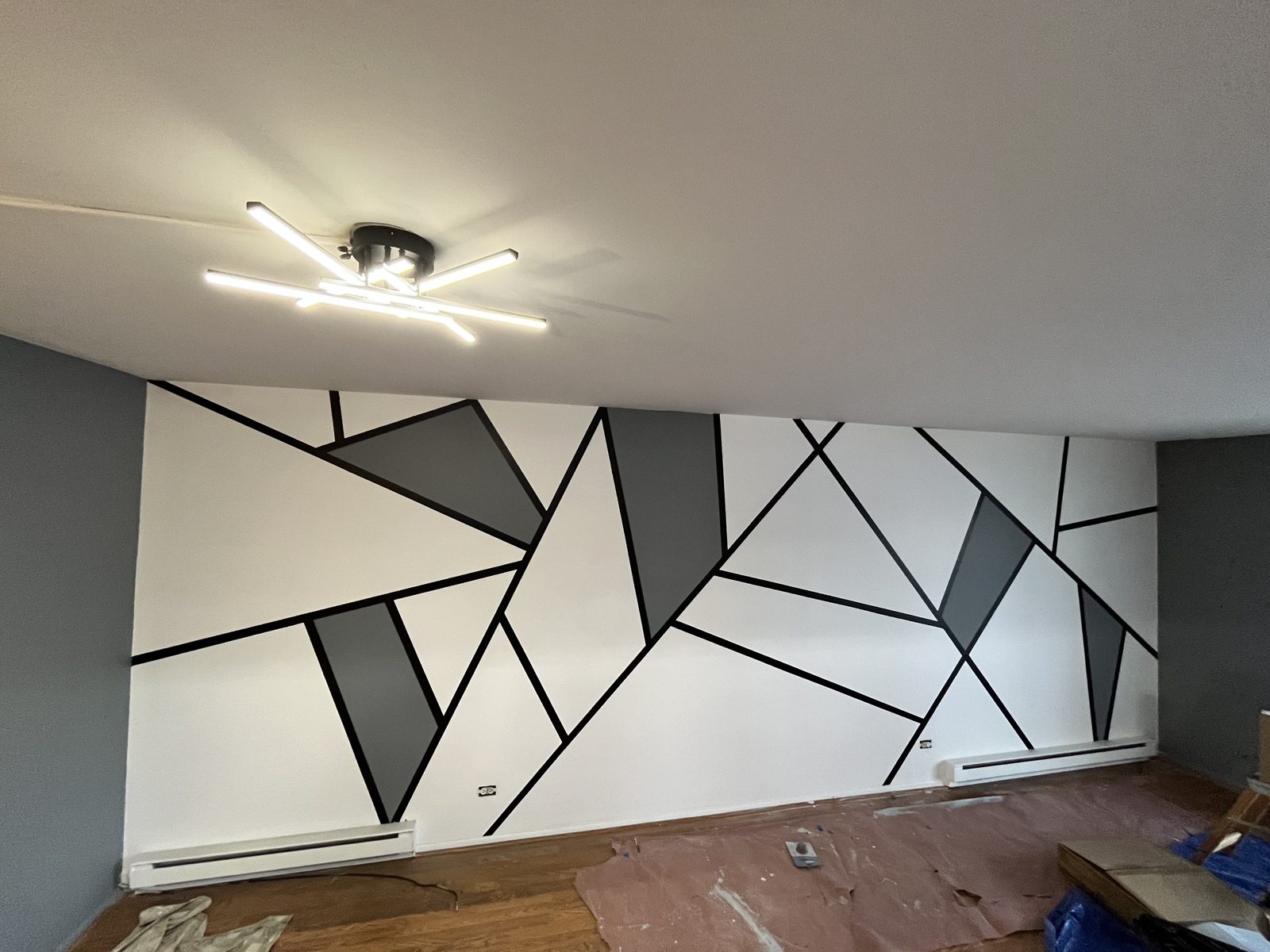
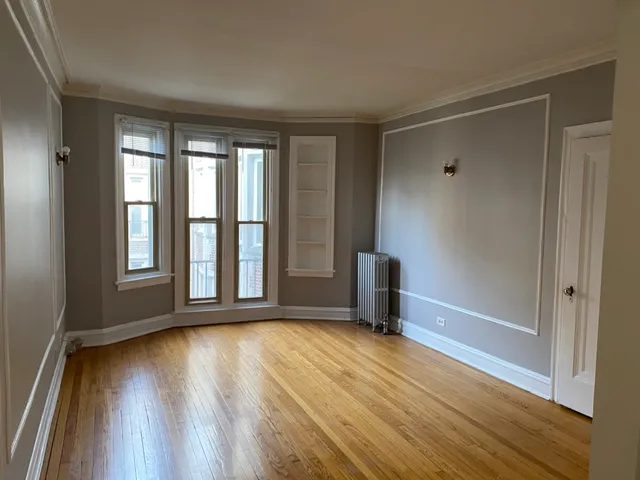
Once the leaves are down and the first cold snap rolls through Matteson, most homeowners stop thinking about paint until spring. That makes sense for the outside of the house. Inside is a different story. Winter is one of the best times of year to repaint a living room, a hallway or a bedroom, because you are spending more time indoors, the holidays are coming, and the outside projects are on hold anyway.
Painting indoors in a Chicagoland winter does come with a few things to plan for: cold exterior walls, dry furnace air, closed windows and paint that needs time to cure. None of them are reasons to wait. They are just things to get right. Here is what we tell homeowners across the South Suburbs.
Why winter works well for interior painting
The obvious reason is timing. You notice scuffed walls and tired colors more when the house is closed up and you are home in the evenings. If you are hosting family in December, a fresh coat in the rooms guests actually see makes a big difference.
There is also a practical reason. Exterior painting in Illinois depends on the weather, and the season for it ends in the fall. Interior work does not care what is happening outside, so it is a natural project for the months when you cannot do anything on the outside of the house.
Temperature: read the can, then mind the walls
Every paint lists a minimum application temperature on the label, and that number applies to the air and the surface. For many standard interior latex paints it is around 50°F, though formulas vary, so check the product you are using.
Most homes in Park Forest, Homewood or Tinley Park are well above that indoors. The catch is the walls on the outside of the house. An exterior wall, a wall behind a bay window or the ceiling under an attic can be noticeably colder than the middle of the room on a single-digit night. A few simple habits help:
- Keep the thermostat steady while the paint dries. Do not drop the heat way down overnight in the rooms being painted.
- Open curtains and move furniture away from exterior walls so warm air can reach them.
- If you use a space heater to warm a cold room, keep it well away from wet walls, drop cloths and paint cans, and never leave it running unattended.
- Avoid painting a cold sunroom or an unheated porch until it can be kept warm for the full drying time.
Dry furnace air changes how paint behaves
A furnace running all day pulls humidity out of the air. Very dry air makes paint dry faster on the surface, which sounds like a good thing but can cause lap marks: visible lines where a fresh stroke overlaps paint that has already started to set.
The fix is technique more than equipment. Work one wall at a time, keep a wet edge, roll from top to bottom in full sections and do not stop halfway across a wall. If your house gets extremely dry in January, a humidifier in the next room can take the edge off.
Ventilation when the windows are closed
In July you would just open every window. In December you need a plan. Fresh air helps the paint dry evenly and clears the smell faster. A few things that work in a closed-up house:
- Crack a window in the room for short stretches during the warmest part of the day.
- Run the bathroom and kitchen exhaust fans to move air out of the house.
- Set the furnace fan to run continuously so air keeps circulating.
- Keep interior doors open so the painted room is not sealed off.
- Keep pets and small children out of the room until the smell has faded.
Low-VOC and zero-VOC paint, in plain terms
VOCs (volatile organic compounds) are part of what you smell as paint dries. Low-VOC and zero-VOC paints are made to release less of them, which usually means less odor. That is helpful in winter, when the house stays shut and everyone is inside.
Two things to keep in mind. First, a low-VOC label does not mean you can skip ventilation; fresh air still helps paint dry properly. Second, colorants can add to the total, so a deep custom color may not carry the same rating as the base paint. If odor is a concern for someone in your home, mention it when you get a quote so the product choice can account for it.
Dry to the touch is not the same as cured
This is the part people underestimate most. Paint goes through stages, and the times on the label assume normal temperature and humidity:
- Dry to the touch: often within an hour or so for latex paint. You can brush past it without leaving a mark.
- Ready to recoat: a few hours later, depending on the product.
- Fully cured: often a couple of weeks or more. Until then the surface is softer and easier to scuff.
In practice that means waiting a few days before you rehang heavy pictures or push furniture back against the wall, being gentle with freshly painted trim and doors, and holding off on scrubbing the walls for a few weeks. Felt pads on furniture that touches painted surfaces help too.
Prep matters more than the season
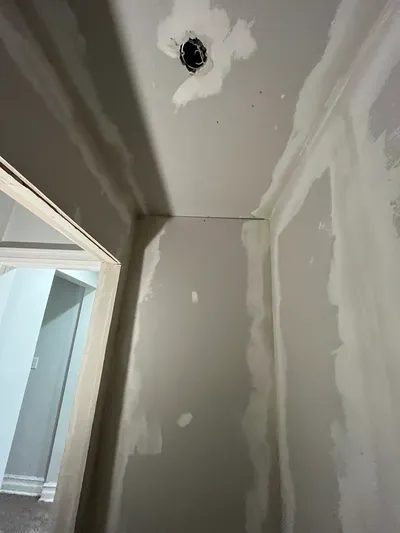
A winter paint job lives or dies on the same thing as a summer one: the prep. Winter is also when you tend to spot the problems. Heating and cooling make a house expand and contract, so nail pops, hairline cracks at the corners of doors and windows, and gaps along trim show up more this time of year.
We never paint over problems; we fix them first. Holes and cracks get filled and sanded, damaged spots get a proper drywall repair, surfaces are cleaned and primed, and floors and furniture are covered before the first coat. You can see the full process on our painting page.
A simple plan for winter painting
- Pick the rooms by when you need them. If guests are coming for the holidays, start with the living room, entry and guest room.
- Clear the space. Move small furniture out, take down pictures and curtains, and pull larger pieces to the middle of the room.
- Keep the heat steady from the day painting starts until the paint is dry.
- Plan your ventilation: exhaust fans, the furnace fan and a cracked window when you can.
- Give each room a few days of light use before you put it back to full duty.
Planning a winter paint project?
Blue Monarch is a family owned and operated painting and handyman company based in Matteson, with over 30 years of experience and more than 900 completed projects. We paint interiors in Matteson, Olympia Fields, Flossmoor, Homewood and across the South Suburbs. If a room or two is on your list this winter, call or text (708) 465-1066 and tell us what you have in mind. We will send a clear, free quote.